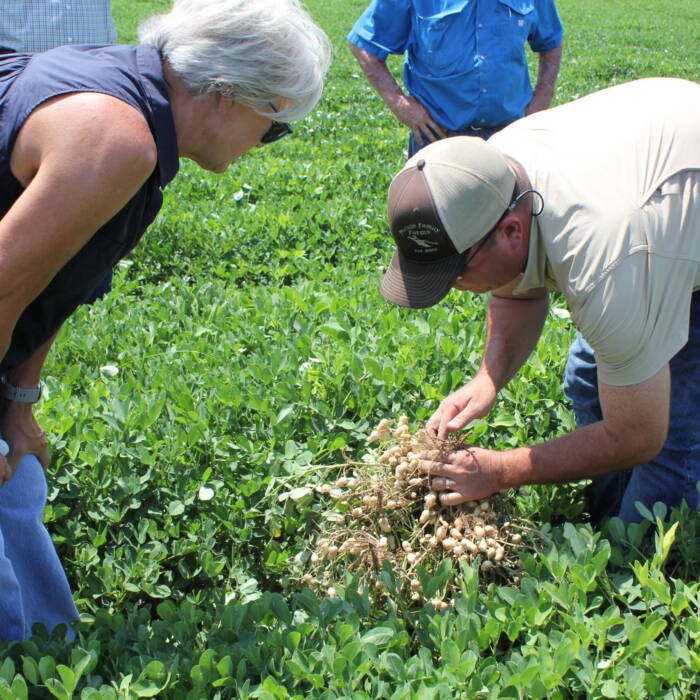
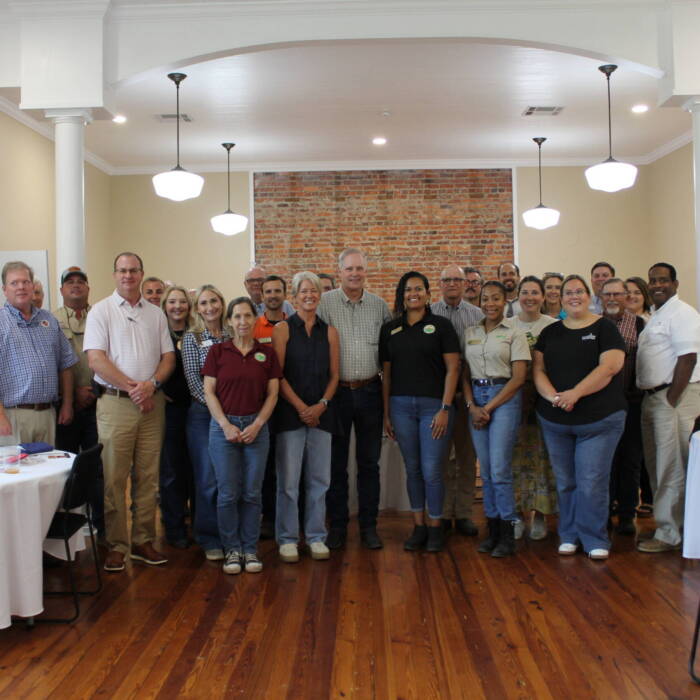
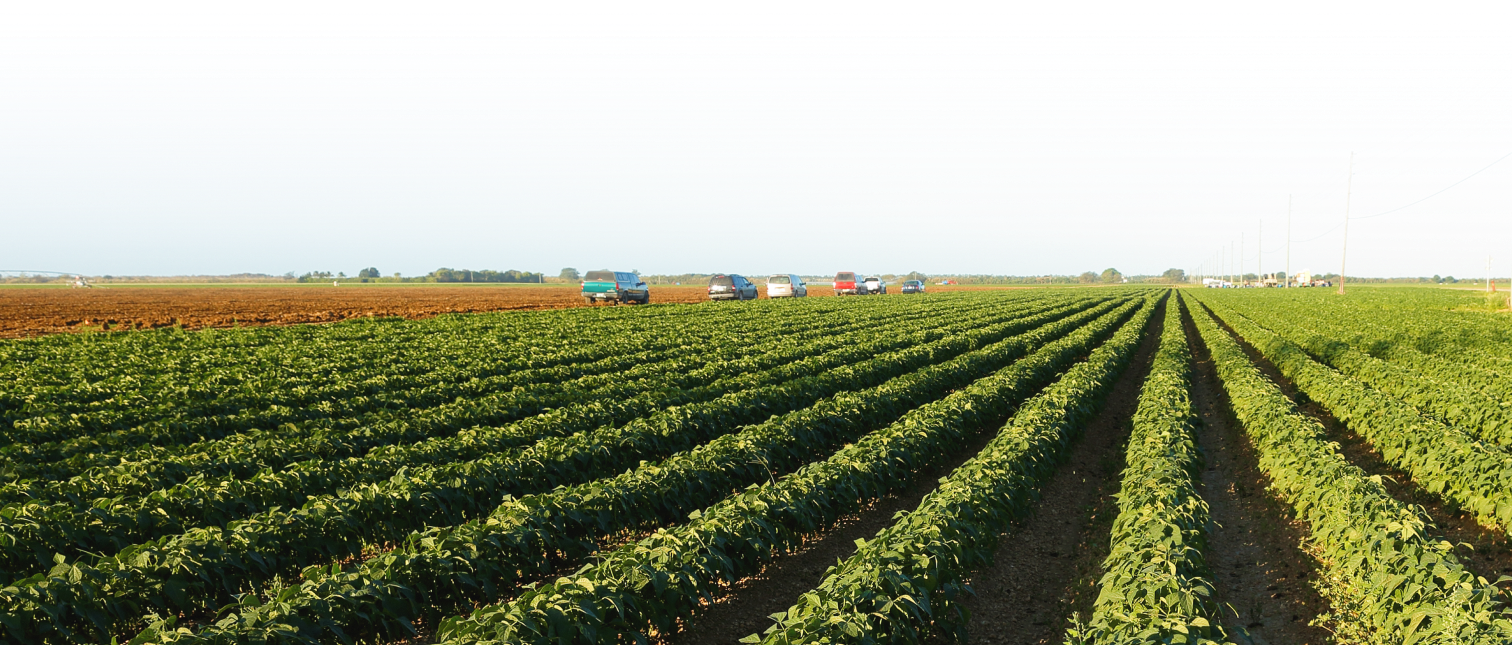
So, how do peanuts become the peanut butter that reaches Florida families? We recently joined several partners on this very journey, from seeing how local Florida farmers, like Jim McArthur of McArthur Farms, grow and harvest the crop to how American Peanut Growers Group, LLC (APGG) processes and sells those peanuts to most U.S. peanut product manufacturers.
Step 1: Planting the Seeds – The journey starts in the field. Florida peanut farmers plant seeds in the spring, typically between March and May. Peanut plants grow underground, where the peanuts develop inside shells beneath the soil.
Step 2: Harvesting the Peanuts– When the peanuts are ready to harvest, usually in August through October, farmers use special equipment to dig the plants out of the ground. The plants are turned upside down, allowing the peanuts to dry in the field for several days. Once dry, a combine separates the peanuts from the rest of the plant.
Step 3: Drying and Grading – After harvest, peanuts are dried to remove extra moisture and help protect their quality during storage. This happens in massive drying containers that measure temperature and moisture. When they are ready for the next phase, the peanuts are then taken to a peanut buying point, where they are cleaned, inspected and graded. This process helps determine their quality and prepares them for processing.
Step 4: Shelling and Roasting- At the APGG, we saw first hand the activity at the processing facility, where peanuts come from some of the very best peanut growers in the Southeastern U.S. Here, peanuts are separated from their outer shells to be prepared for manufacturers, from candy makers to peanut butter brands. After shelling, the peanut kernels are then roasted to bring out their familiar flavor and aroma. Roasting also helps prepare the peanuts for grinding.
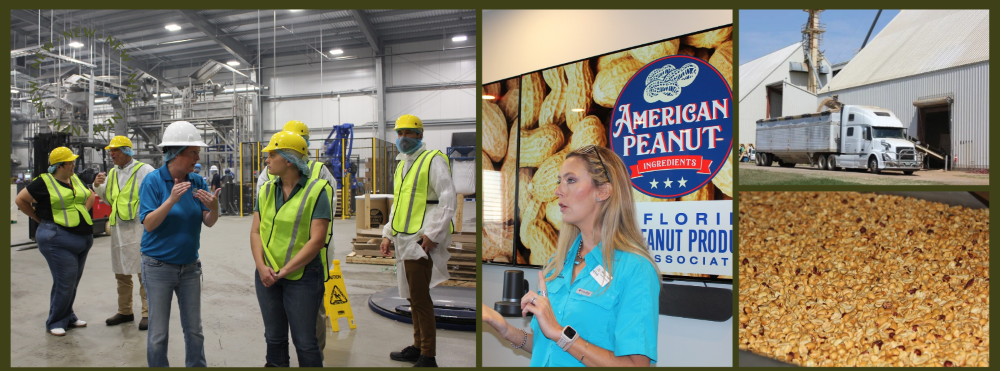
Step 5: Turning Peanuts Into Peanut Butter- Once roasted, the peanuts are cooled and may be blanched to remove their thin, reddish-brown skins. While some of the peanuts are separated to be eaten as whole kernels, some are crushed for a chopped usage (like in ice cream), and some are destined for peanut butter, going through machines to be ground into a smooth paste.
Processors take various approaches here depending on the purchaser. Because each brand of peanut butter will have its own recipe, ingredients like salt, sugar or oil may be added by the manufacturer to create the desired flavor and texture. In some cases, those manufacturers want to grind the peanuts for peanut butter themselves, and in other cases they’ll mix in their ingredients once they have the paste. Either way- that protein-rich paste is on its way to a jar!
Step 6: Packaging and Delivery- Finished peanut butter, packaged into jars or other containers, is what the public knows best. What they may not realize is that companies like Peanut Proud, who make the jars for our food banks, are made up of peanuts that started right here in the South. That little peanut made its way from soil in Malone, Florida to grocery store shelves, food banks and homes across the state. It takes approximately 720 individual peanuts to make a 16-ounce jar of peanut butter, packing each jar with the protein, healthy fats, and other nutrients naturally found in peanuts.