skip to content

Staged and Ready: Taking Proactive Steps for Florida Hurricane Preparedness
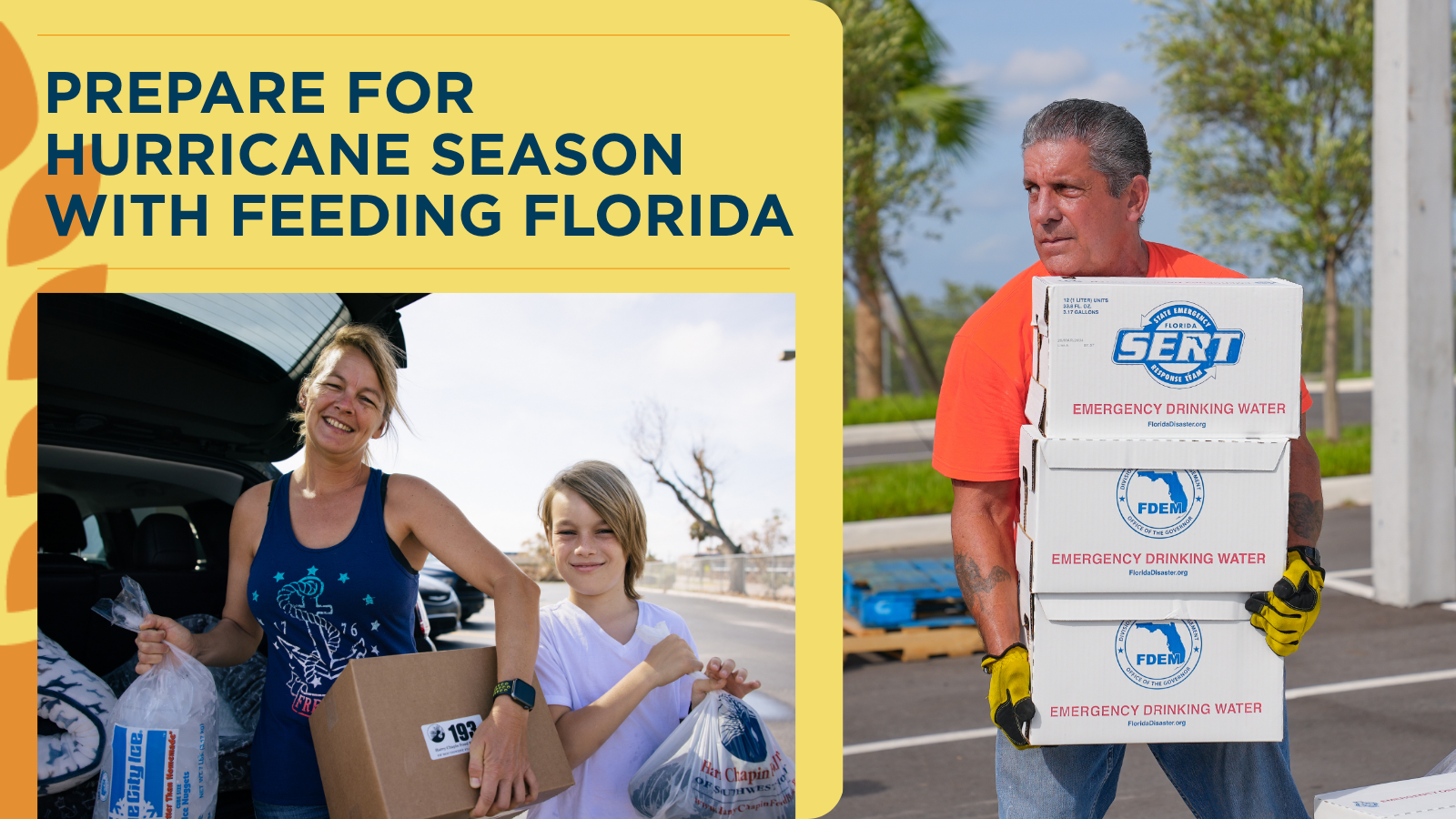
Feeding Florida’s Role in Disaster Relief

Feeding Florida is the only statewide hunger relief organization with an active presence in every corner of the state, allowing us to ramp up our operations by 300% during natural disasters. We serve as an integral part of the Florida State Mass Care team (ESF6), collaborating closely with the Florida Division of Emergency Management (FDEM), Feeding America, and FEMA to plan and execute response and relief efforts after a storm.

We don’t do this alone. Our food bank network is a statewide supply chain system with established infrastructure, including over 160 commercial trucks and 20 warehouses with more than 500,000 square feet of storage for critical supplies. This strategic placement ensures that we are positioned to provide food, water, and resources before, during, and after a disaster.
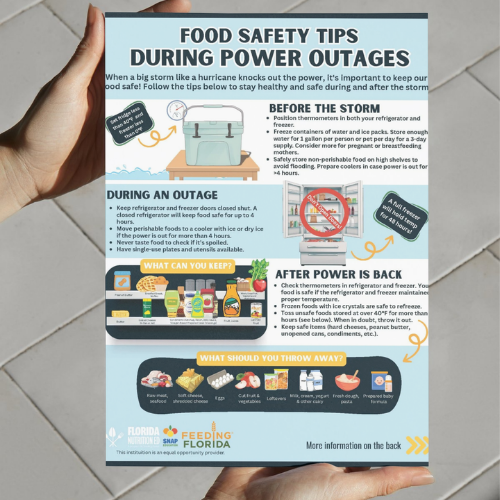
Our Florida Nutrition Education team also understands the critical role food safety plays in relief efforts. They’ve developed this handy tool for families and individuals to reference as they re-stock pantries and refrigerators after power loss. Helping individuals know what needs to be replaced and what can be kept makes a substantial difference on people’s wallets as well as their health.

How Our Food Banks Help with Hurricane Prep

Our local food banks work year-round to ensure Florida is ready for the next storm. We partner directly with FDEM to strategically stage food, water, and disaster supplies to enable an immediate response the moment a disaster strikes.

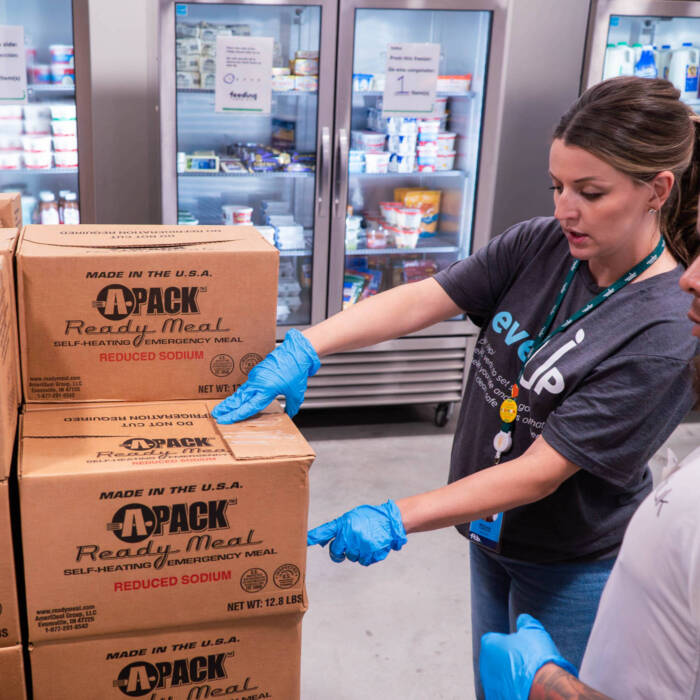
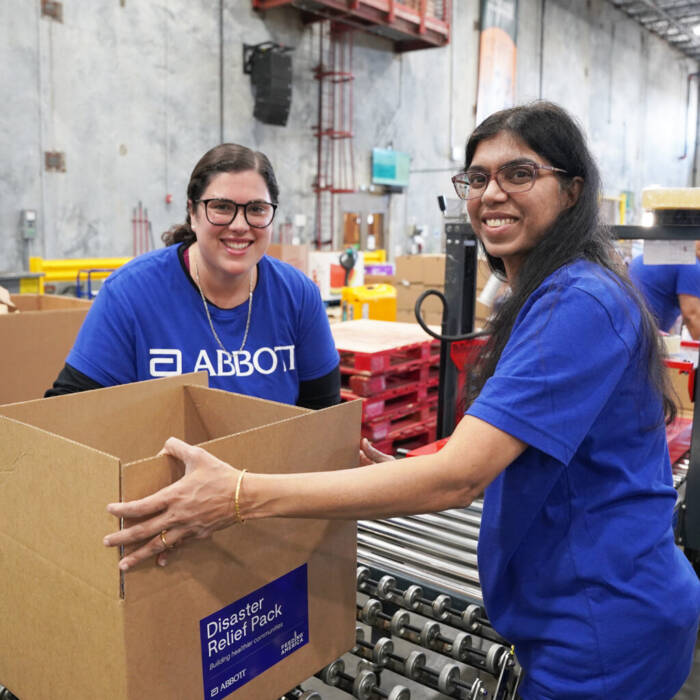
For example, the Second Harvest Food Bank of Central Florida collaborates with partners like Abbott to assemble Abbott Disaster Relief Packs. These packs are designed to meet a family’s nutritional needs for three days without requiring refrigeration or warming, containing essential items like Pedialyte and Ensure.

Additionally, our food banks work directly with local emergency management operations to coordinate resources and communication, ensuring that high-need areas are identified well in advance.

What Families Should Do to Prepare


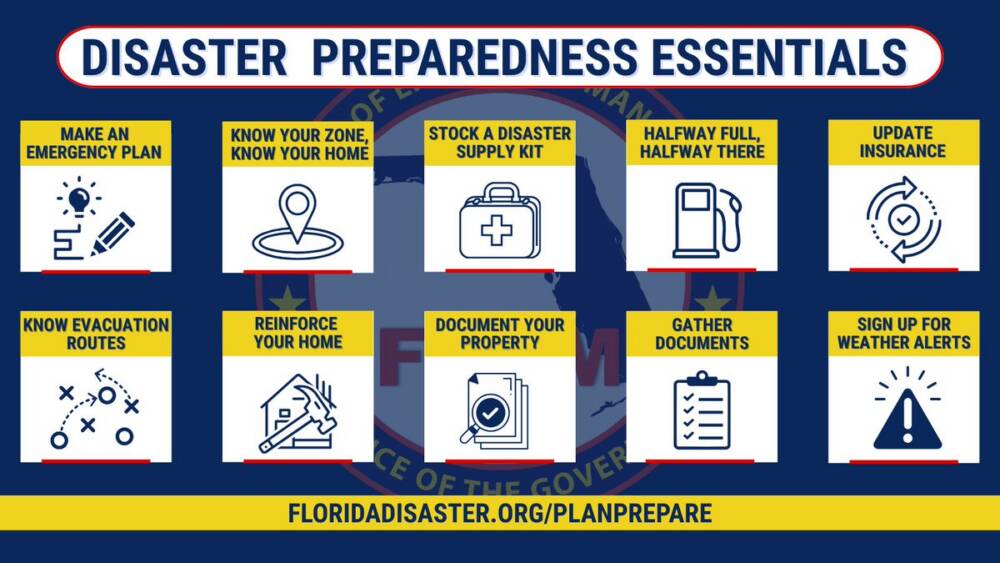
Preparation is a proactive choice that saves lives. Based on guidance from the Florida Division of Emergency Management, every family should follow these critical steps:

  • Know Your Zone, Know Your Home: Understand if you live in an evacuation zone and assess your home’s ability to withstand high winds and heavy rain. This information determines whether you should shelter in place or evacuate when orders are issued.
  • Make a Plan: Your emergency plan should account for every household member, including children, seniors, and pets. It should highlight evacuation routes, shelter options, and a clear communication strategy.
  • Build a Disaster Supply Kit: Assemble a kit with enough medicine, batteries, and personal documents to last at least seven days. Ensure you have at least one gallon of water per person per day and a stock of non-perishable foods like proteins, grains, and fruits.
  • Stay Informed: Sign up for emergency notifications through AlertFlorida and keep a battery-operated or hand-crank weather radio nearby to receive updates during power outages.
  • The Halfway Full Rule: Keep your vehicle’s gas tank at least halfway full throughout hurricane season to avoid long lines and fuel shortages before a storm.


How Families Can Turn to Their Food Banks if Disaster Strikes

If a disaster impacts your community, our network is here to support your recovery. 

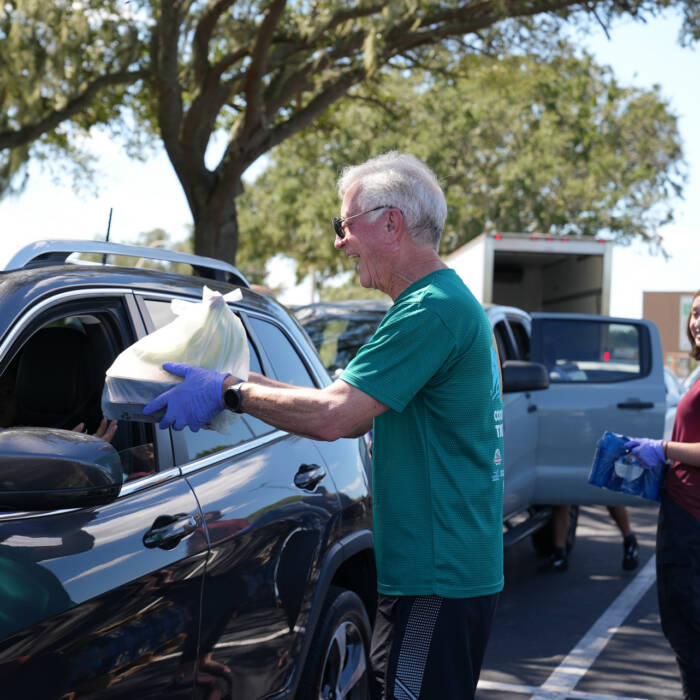
Families can visit the Feeding Florida disaster response page to identify food banks providing relief in declared disaster zones. The first phase of relief will be MREs (meals ready to eat), water, and food boxes with non-perishable items. As power returns to the community, the diversity of food boxes will include fresh produce, protein, and dairy, as well as more shelf stable products to help restock pantries. 

For those in areas not officially declared a disaster zone but still in need of assistance, you can find your local food bank and then use their “Food Finder” tools on individual food bank websites to help you locate the nearest pantry or distribution site. 

In the wake of a storm, several of our facilities can rapidly ramp up the production of hot and cold meals for local shelters, community organizations, and from their own kitchens. These relief distributions will also be noted on their website so that those affected can access healthy meals. 

Our food banks remain embedded in our communities long after the storm passes, providing ongoing support as neighbors rebuild and regain stability. Families and neighbors will be able to depend on our food banks and local pantries as they go from immediate relief efforts to rebuilding their lives. 

Build Your 7-Day Disaster Supply Kit

The Florida Division of Emergency Management emphasizes that having the following supplies ready before a storm strikes is a proactive step that can protect lives and property.

As you look at this 7-day disaster supply kit, be sure to tailor it to meet the specific needs of your household and contain enough resources to sustain every family member for at least a week. 

  • Food and Water: Stock enough non-perishable food for at least seven days, including proteins, grains, fruits, vegetables, and snacks. You should also have at least one gallon of water per person, per day to cover both drinking and hygiene needs.
  • Health and Safety: Include a first-aid kit and a sufficient supply of all necessary medications and medicines.
  • Communication and Power: Ensure you have flashlights, a steady supply of batteries, and a battery-operated or hand-crank weather radio to stay informed if power or cell service is disrupted.
  • Important Documents: Keep copies of IDs and other critical personal documents in a safe place, preferably waterproof, within your kit. 
  • Specialized Items: Personalize your kit to include items for babies, seniors, and pets. This may include adaptive feeding devices or specialized equipment for those with access and functional needs, especially if they require electricity to operate.

For more information on how to prepare, your evacuation zones, and information for when recovery support is needed, visit https://www.floridadisaster.org/

Recent News

This is the Network: Feeding the Gulf Coast

This month we are highlighting Feeding the Gulf Coast, one of Florida’s oldest food banks providing nutritious food and essential resources to neighbors facing poverty, crisis, or disaster. While this unique food bank provides support to three states along the Gulf Coast, they specifically serve seven counties across the Florida Panhandle, operating a branch in […]

Snack Into Summer with Kid-Friendly Recipes

Long summer days call for cool treats, colorful snacks, and fun time in the kitchen. Whether you need a quick afternoon bite or an easy activity to keep kids busy, these simple recipes make snack time part of the summer fun. The recipes below have been tested, tasted, and approved by the Florida Nutrition Education […]